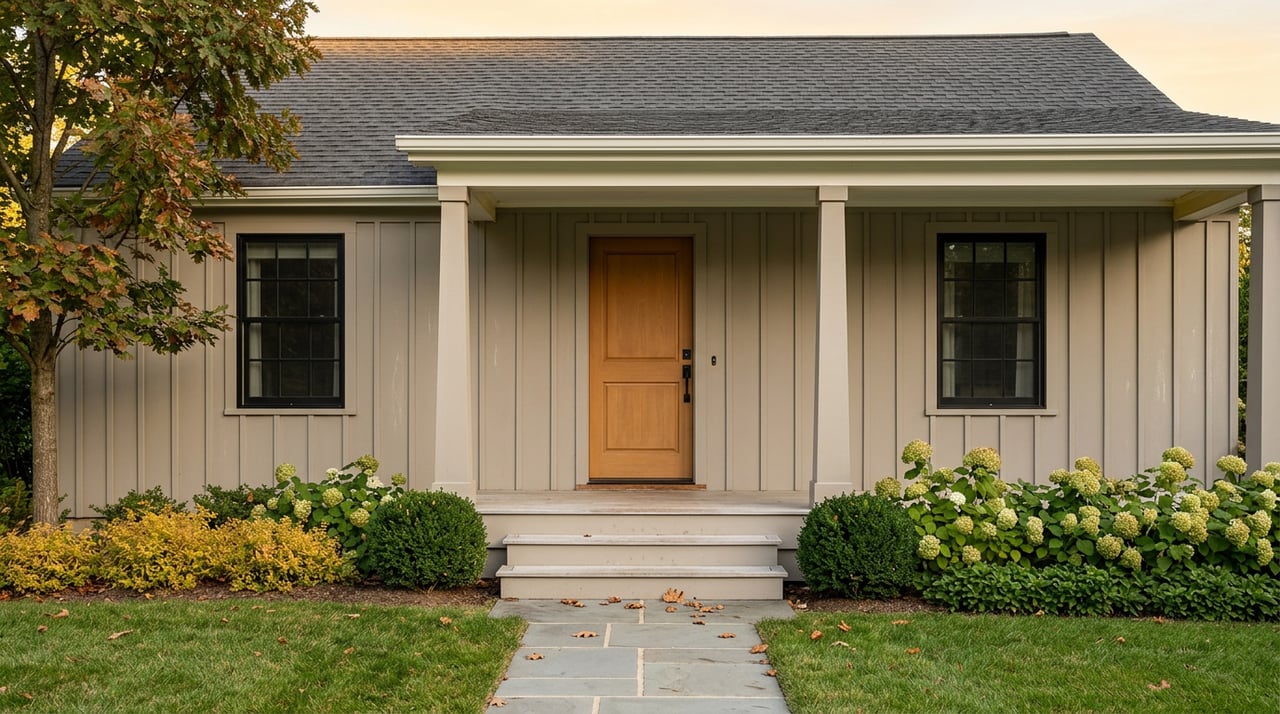
The Saturday Downtown Madison Skips Its Own Farmers Market
Walk past the Prospect Street parking lot on almost any Saturday morning between late May and mid-December, and you'll find it transformed: folding tables, crates of produce, a line for something warm. This is the Madison Farm & Artisan Market, now in its 33rd season, and it runs nearly every week for close to seven months. Thirty Saturdays, to be exact, from May 23 through December 12.
Only two of those thirty go dark. One is the Fourth of July, which makes sense. The other is October 3, which doesn't, until you realize what else is happening that day.
That's Bottle Hill Day, Madison's signature street festival, marking its 51st year in 2026 with a theme built around America's 250th anniversary. It's the single biggest gathering the borough puts on, drawing between 10,000 and 20,000 people across more than six blocks. And the market's organizers don't try to run alongside it. They just skip it, the same way they skip a federal holiday.
That's the detail worth sitting with if you live here. Most people who've never lived in a town like this assume the festival is the fall calendar. In practice, Bottle Hill Day isn't the finale of Madison's autumn. It's an interruption inside a season that keeps going without it.
The Downtown Development Commission runs the market on Saturdays from 9 a.m. to 2 p.m. in the Prospect Street lot, at the corner of Kings Road, and this year marked the 33rd time they've done it. That's a long enough run that it isn't a summer pop-up dressed up as tradition. It's infrastructure. Fresh produce, baked goods, specialty foods, and handmade goods rotate through nearly every weekend from late spring through the first weeks of winter, closing out the calendar year before the holidays fully take over.
The DDC treats this as the connective tissue of the retail district, not a side event. Their own materials describe the goal plainly: keep it community-centered, keep the vendor mix varied, keep giving nonprofits and small businesses a weekly platform. There's no attempt to build the market up toward some seasonal climax. It's steady by design, which is part of why the one deliberate gap in the schedule stands out.
Bottle Hill Day itself is worth understanding on its own terms, not just as the market's exception. This year's edition runs from 10 a.m. to 5 p.m. across more than six blocks, with four stages of live music, three amusement areas at Dodge Field, and more than 225 vendors mixing nonprofits, crafters, and retail businesses. The Downtown Development Commission's Beer Garden returns for its 13th year, positioned on Kings Road between Prospect Street and Maple Avenue. Food comes from three directions at once: a Food Court on Cook Avenue, a Food Truck Court on Kings Road, and whatever the participating restaurants along the route decide to put outside their doors for the day.
The name itself traces back further than the event does. Madison was established as the village of "Bottle Hill" in 1715, and the festival borrowed that name in 1974 when Mayor Elizabeth Baumgartner started it as a way to promote the business district. Fifty-one years later, the goal hasn't changed much. It still exists to put people in front of Main Street storefronts, just for one day instead of thirty Saturdays a year.
If you're planning around it, the borough runs a Park & Ride shuttle from the Madison Community Pool lot straight into town, and several streets close for the day, including Waverly Place and stretches of Central Avenue and Kings Road. None of that is a secret to anyone who's lived through a few Octobers here, but the scale of it is easy to forget until the barricades go up again.
Between market Saturdays and the one day set aside for Bottle Hill Day, Main Street keeps doing what it does the rest of the year: churning through storefronts. Tino's Artisan Pizza Co. recently opened at 6 Main Street, another entry in a business district that turns over more often than the festival calendar might suggest.
The Madison Area Chamber of Commerce used its Annual Awards Dinner in June, held at the Madison Hotel in nearby Morristown, to put names on some of that turnover. Fedko Jewelry took home the Best New Gem on Main Street award, recognized for bringing new energy to a stretch of downtown that's seen its share of both openings and closings. The Baker won the Outstanding Interior Renovation Award for a space transformation Chamber officials said preserved the character of the location while updating it. The Joe Kubert School of Cartoon & Graphic Art received the Innovation Award for its role in the borough's creative education scene, and Carmen DeRosa and Mauris Alonso of PC Problems were recognized for helping the Chamber rebuild its own website. Barry Kroll closed out the evening with the Distinguished Service Award, honored for years of work across multiple Madison nonprofits.
None of this shows up if you're just glancing at storefront signage on your way to the market. But it's the same six or so blocks doing double duty: a weekly commerce engine on Saturdays, an annual festival ground in October, and, in between, a business district that the Chamber is actively tracking and rewarding one award at a time.
For residents who've done the market and the festival enough times to want a third option, the Museum of Early Trades & Crafts sits on Main Street inside a Richardsonian Romanesque building donated to the borough in 1900, and it runs its own calendar of walking tours through the same downtown blocks. One tour focuses on the architecture of buildings like the James Library Building. Another lets the current homeowner and caretaker of the Luke Miller house talk through the history of one of the oldest homes in Madison. Neither requires festival crowds or market hours. Both are a reminder that this stretch of town has layers most people walk past without noticing.
METC's regular hours run Tuesday through Saturday, 10 a.m. to 4 p.m., and Sunday from noon to 5 p.m., which means it's open on market Saturdays too. For anyone who's spent a season buying tomatoes at the Prospect Street lot without ever crossing the street to see what's inside that building, the two aren't mutually exclusive. They're a few blocks apart on the same morning.
Put it together and Madison's fall doesn't really look like a single event surrounded by ordinary weekends. It looks like a 30-Saturday retail season with exactly one scheduled exception, built around a festival that exists specifically to promote the same storefronts the market spends the rest of the year supporting quietly. Bottle Hill Day gets the crowd estimates and the four stages. The market gets the other 28 Saturdays, no stage required.
That's the version of downtown Madison that doesn't show up in a one-day festival recap or a single Yelp list of new restaurants. It's the version you get from paying attention to what the Downtown Development Commission actually schedules, and what it deliberately doesn't.
If you're weighing a move to Madison, or you're already here and thinking about what comes next in this market, Ryan Dawson knows this downtown block by block, not just by its headline events. Schedule a free consultation to talk through what's happening in Madison's housing market this fall.

He is a top producing real estate agent at Weichert Morristown. His community involvement and drive for perfection gives him an advantage over other real estate agents in the area. He prides himself on being knowledgeable on the latest marketing technologies, but still relying on “old school” sales techniques.
RYAN DAWSON
ADDRESS
20 MADISON AVE
MORRISTOWN NJ 07960