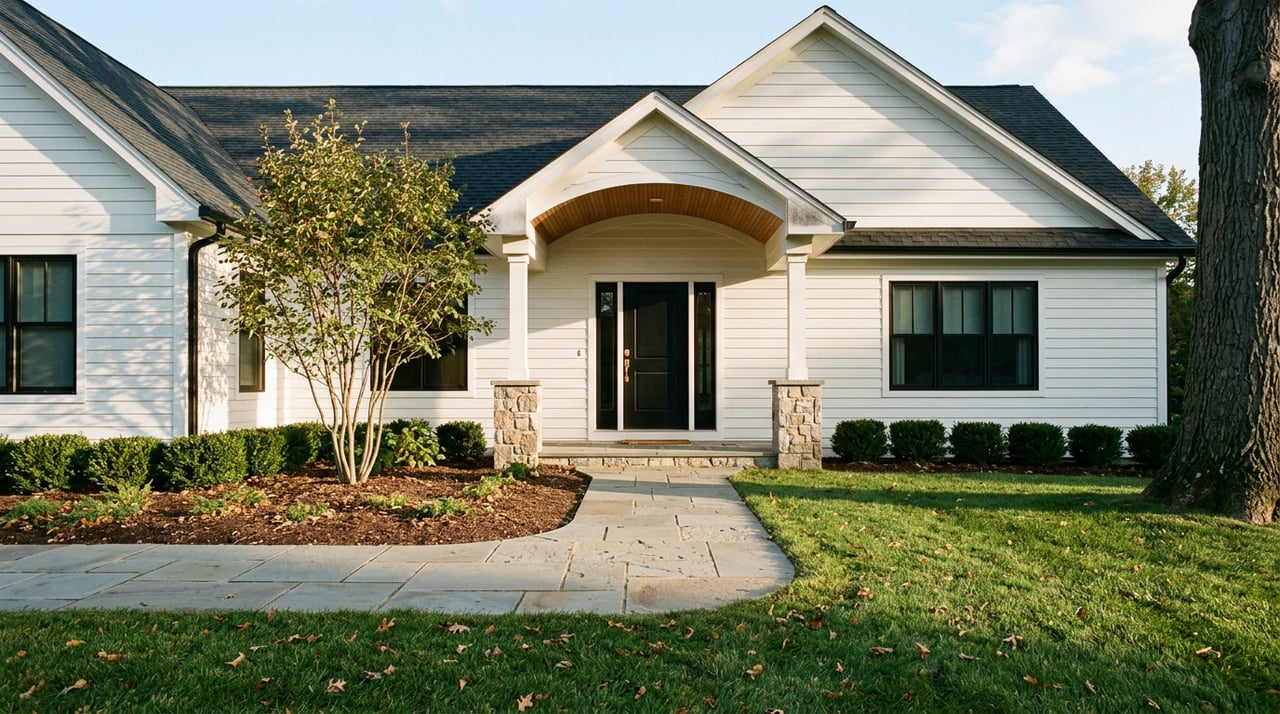
Lake Parsippany HOA Dues Easement and Loan Risk
A two-bedroom house near Lake Parsippany went under contract last year with a line in the listing remarks that stops most buyers cold: cash or rehab loans only, will not qualify for conventional financing. No structural defect. No pest issue. No condemned roof. The house was fine. The problem was in the deed, and it traces back to a sentence written in 1933.
That sentence is the reason a segment of Parsippany's housing stock behaves differently at the closing table than the rest of the town, and it's the reason a buyer's agent who doesn't know Lake Parsippany's history can walk a client straight into a financing surprise three weeks before closing.
Most buyers in New Jersey know how to spot an HOA. It shows up in the listing as a monthly or annual fee, it's disclosed in a resale certificate, and the association is a corporation with bylaws everyone signed onto when they bought in. Lake Parsippany doesn't work that way, and that's exactly the trap.
The Lake Parsippany Property Owners Association formed in 1933 to manage the lake and the recreational land around it for the roughly 2,200 lots inside what's called the original purchase tract. For decades membership was voluntary. Then in 2015, facing a lake and dam that needed real money to maintain, the association's board commissioned a legal opinion on whether it could compel payment from every property owner in the tract, whether or not they ever set foot on the beach.
The argument turned on a clause buried in the chain of title for those 2,200 lots, granting each owner the right to use, in common with others, the waters of Lake Parsippany for bathing, boating and fishing.
That clause is an easement, not a membership form.
The homeowners who didn't want to pay took it to court. In Purzycki et al. v. Lake Parsippany Property Owners Association, the Superior Court of New Jersey in Morris County ruled on October 7, 2019 that the association could compel dues from every property owner in the tract, based on the easement language running through their deeds and on maps filed with the county at the time the community was originally platted. The court's reasoning wasn't just about contract law. It found that a poorly maintained lake would hurt the value of every property nearby, not just the ones on the water, which meant every owner in the tract had a stake in keeping the lake funded whether they used it or not.
That ruling is why the association can bill every property in the original tract today, and why current listings inside that boundary still carry mandatory annual dues, with 2026 invoices having been due by March 31 of this year according to the association's own billing calendar.
There was a legislative attempt to change this. A bill known as S3661 passed both chambers of the New Jersey Legislature in 2019 to rein in what lawmakers called surprise mandatory fees from lake associations across the state. Governor Phil Murphy conditionally vetoed it, citing concern that stripping lake associations of their ability to collect dues would leave them unable to fund dam safety and stormwater compliance under state law. The Senate accepted his changes without amendment, sending the fight back to the Assembly. Whatever became of the bill after that, the Lake Parsippany Property Owners Association is still billing every property in the tract today. That billing calendar is the clearest evidence that the mandatory structure the Morris County court upheld is still standing.
Parsippany has plenty of housing with conventional, recorded associations. Mazdabrook Commons, a 222-unit townhome community built around 2003 off Route 80 and 46, runs on a standard Planned Unit Development structure where owners are responsible for their own units and exterior maintenance stays modest because there's less common property to fund. It looks and behaves the way most buyers expect an association to behave.
Lake Parsippany doesn't map onto that model, and the difference matters enough to lay out side by side.
| Lake Parsippany tract | A standard Parsippany PUD (e.g. Mazdabrook Commons) | |
|---|---|---|
| Origin of obligation | Easement clause in the chain of title, dating to 1933 | |
| How dues became mandatory | 2019 Superior Court ruling in Morris County | |
| What it funds | Lake, dam, beaches, water quality, clubhouse | Building exteriors, common grounds, pool |
| Where it shows up in a listing | Sometimes buried in remarks, not always flagged | Standard HOA fee line, always disclosed |
| Financing complications | Some properties denied conventional financing | Typically eligible for standard mortgage products |
The last row is the one that actually changes a transaction. A recorded PUD fee is something an underwriter has seen a thousand times. A mandatory easement assessment tied to 1933 deed language is not, and some lenders decline to write a conventional loan on properties where the title carries that obligation, which is why cash and rehab-loan buyers show up disproportionately in Lake Parsippany listings.
If you're looking at a house inside the Lake Parsippany tract, the fee itself isn't the hard part. A 2025 listing for a tract property put the mandatory dues at $310 a year, which is not a number that changes anyone's monthly budget. The hard part is timing. Buyers who find out about the mandatory easement assessment during attorney review have options. Buyers who find out after their lender pulls the title report and flags it have a financing problem with a closing date already on the calendar.
A few things worth asking before you write an offer on anything near the lake:
None of this makes Lake Parsippany a bad place to buy. People who live there get a stocked trout lake, sailing, swimming and a clubhouse for less than the cost of a single restaurant tab each month. The point is narrower than that. The obligation is real, it's older than almost every other disclosure a buyer sees in this market, and it was built into the land before anyone alive today bought their house.
Does every home in Parsippany have to pay Lake Parsippany dues? No. Only properties within the original purchase tract mapped when the community was platted in the 1930s carry the mandatory easement obligation. Homes elsewhere in Parsippany, including PUD communities like Mazdabrook Commons, run on entirely separate, standard association structures.
Can a new owner opt out of paying if they never use the lake? The 2019 Superior Court ruling addressed exactly this argument and rejected it, finding that the lake's upkeep supports property values for the whole tract regardless of individual usage.
Why do some Lake Parsippany listings say cash only? Because some lenders won't write a conventional mortgage against a title carrying a mandatory, non-standard easement assessment. It's not a defect in the house. It's an underwriting decision, and it varies by lender, which is why getting a preliminary answer early in attorney review matters more here than in most Parsippany transactions.
Buying near a lake in Morris County should come with the fun parts and none of the surprises. If you're evaluating a Lake Parsippany property, or comparing it against a more conventional Parsippany community, Ryan Dawson can walk you through what the title actually says before you're locked into a contract. Schedule a Free Consultation.
This article is general information, not legal, tax or financial advice. Consult a qualified professional about your situation.



He is a top producing real estate agent at Weichert Morristown. His community involvement and drive for perfection gives him an advantage over other real estate agents in the area. He prides himself on being knowledgeable on the latest marketing technologies, but still relying on “old school” sales techniques.

RYAN DAWSON
ADDRESS
20 MADISON AVE
MORRISTOWN NJ 07960