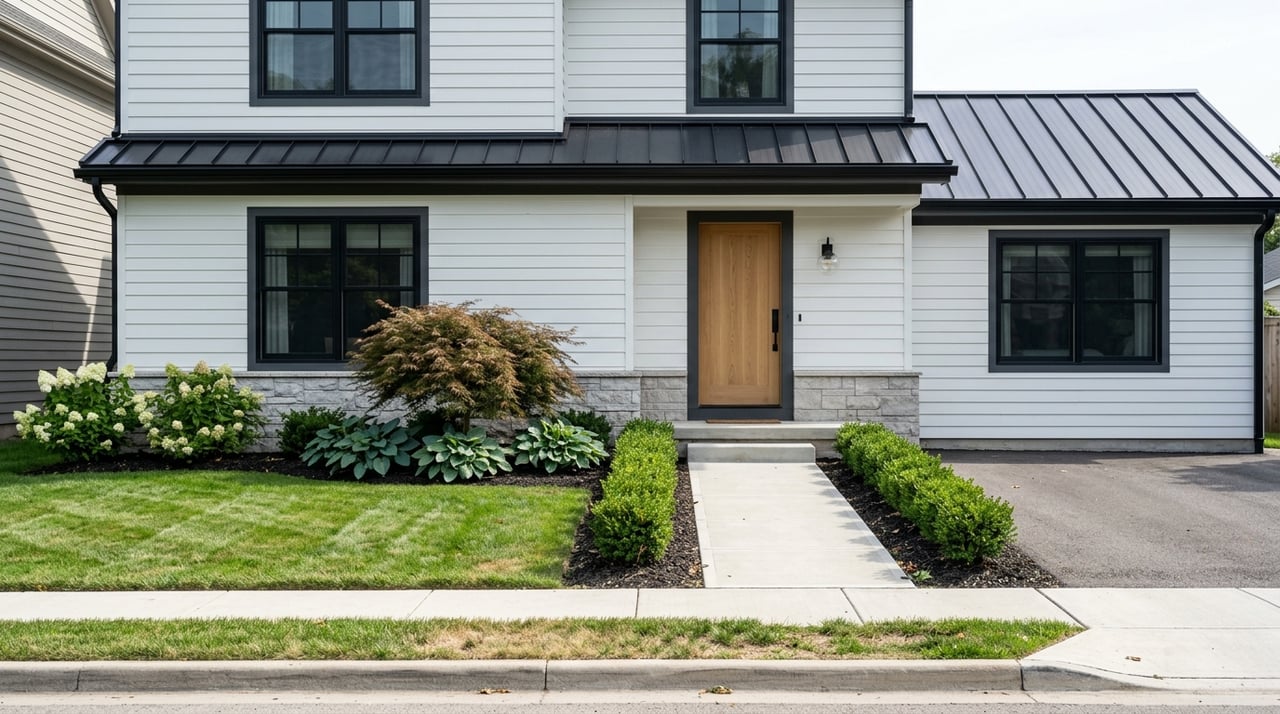
Single-Family Living In Morristown: Neighborhood Snapshot
If you want a single-family home in Morristown, one of the first surprises is how much can change from one street to the next. In a town that covers just 2.8 square miles, you can find older, more compact blocks near the center and more yard-oriented pockets closer to the edges. That mix can make your search feel exciting, but it also means you need a clear picture of what daily life really looks like before you buy. This snapshot will help you understand Morristown’s single-family housing stock, neighborhood patterns, commute access, and what kind of buyer fit each area tends to offer. Let’s dive in.
Morristown has a mixed housing stock, and detached single-family homes are only one part of that mix. The 2019-2023 ACS counted 9,318 housing units in town, including 2,330 detached one-unit homes, or 25.0% of the total. That matters because it helps explain why single-family homes here can feel more limited and more varied than in towns built mostly around larger suburban subdivisions.
Owner occupancy also reflects Morristown’s mixed profile. The owner-occupied housing rate is 36.7%, and the median value of owner-occupied homes is $567,600 in the 2020-2024 ACS. For you as a buyer, that points to a market where single-family homes sit within a broader mix of condos, apartments, and attached housing.
A big part of Morristown’s appeal is that it does not feel uniform. The town’s 2025 housing plan says 52.6% of housing structures were built before 1970, so much of the housing stock skews older than in many suburban New Jersey towns. You are often looking at homes shaped by different decades, lot patterns, and street layouts rather than one consistent style.
The zoning code adds another layer. Morristown says its single-family housing stock ranges from compact neighborhoods that reflect the 1930s to larger-lot subdivisions with split-level homes built in the 1980s. That variety is one reason buyers should look beyond a general town-wide label and pay close attention to the feel of each block.
The town’s 2024 zoning update also notes that local rules were designed to better capture existing character and development patterns, regulating development not only by district but also by street frontage. In simple terms, a home that looks like a great fit on paper may live very differently depending on the exact street it sits on.
If you are comparing single-family options, lot size is one of the most important details to watch. For existing single-family parcels, Morristown uses width-based lot standards. The minimum lot area ranges from 2,400 square feet in the narrowest category to 12,500 square feet in the widest category.
That range helps explain why one home may offer a compact outdoor footprint while another feels more traditionally suburban. It also means you should not assume a certain yard size just because two homes share the same town address. In Morristown, lot dimensions can shift substantially from one street to another.
One of the simplest ways to understand single-family living in Morristown is to think in terms of Green-adjacent streets and edge pockets. The town says all residential neighborhoods are walkable to downtown, which is centered on the historic Morristown Green. So even when you choose a quieter residential street, you are still generally close to the town’s main commercial and civic core.
Homes closest to the Green usually feel more urban, older, and convenience-oriented. These areas often reflect tighter development patterns, established streetscapes, and quicker access to restaurants, coffee shops, transit, and downtown activity. If you like being able to stay close to the center of town, this setting may feel like a strong fit.
Edge neighborhoods tend to feel more suburban and yard-oriented. These pockets are more likely to appeal to buyers who prioritize parking, outdoor space, and a quieter residential setting while still wanting access to downtown Morristown. The tradeoff is often simple: more space usually means a little more separation from the busiest part of town.
Morristown’s MF-1 districts help explain the feel of several one- and two-family neighborhoods near the center. The town says these areas were built primarily before 1920 and are walkable and connected to essential services and amenities. They also tend to have reduced setbacks and larger structures relative to lot size.
For you, that can translate into a neighborhood that feels established, connected, and highly convenient. It can also mean homes sit closer together and streets may feel denser than what some buyers expect from a suburban single-family search. That is not a drawback or an advantage on its own. It is simply a different living pattern that suits some buyers better than others.
The town also identifies an Estate overlay for certain historic neighborhoods. It is described as reflecting large homes on relatively small parcels, which helps explain why some central streets can feel especially established and architecturally distinct. If you are drawn to character, period details, and a more historic setting, these areas may stand out.
Morristown’s location and scale create a lifestyle that is hard to find in many suburban markets. The town says all residential neighborhoods are walkable to downtown. That gives single-family buyers a strong convenience factor, even if the home itself sits on a quieter street.
Downtown amenities are unusually robust for a town this size. Morristown lists 141 restaurants, 20 bars, 9 coffee shops, a 1,302-seat community theatre, an upscale 10-screen cinema, and retail anchors including Whole Foods. If you want a single-family home without giving up access to dining, entertainment, and daily errands, Morristown offers a strong balance.
For many buyers, Morristown works because it combines neighborhood living with practical regional access. Morristown Station is on NJ Transit’s Morris & Essex Line, and the town says the station provides Midtown Direct service. NJ Transit also lists bus connections 871, 872, 873, 874, 875, and 880 for Morristown.
The town reports more than 3,500 public parking spaces downtown, which can be helpful for households that drive regularly or expect visitors. Census QuickFacts puts Morristown’s mean travel time to work at 23.9 minutes in 2020-2024. That figure gives useful context for how many residents balance local living with manageable commute patterns.
Single-family living is not only about the house. It is also about what surrounds you on a normal weekday and on a free weekend. Morristown has strong access to recreation, which adds another layer to its buyer appeal.
The town highlights Morristown National Historical Park, Lewis Morris, the Traction Line Recreational Trail, Loantaka Brook Reservation, and the Great Swamp National Wildlife Refuge. The National Park Service says Morristown National Historical Park was the nation’s first National Historical Park. If outdoor access and nearby green space matter to you, Morristown offers more than just a downtown lifestyle.
Morristown works well if you want choices within a compact footprint. You can look for an older home with strong walkability near the center, or you can focus on edge pockets where yard space and a quieter residential setting may take priority. The best fit depends less on broad town labels and more on how you want your daily routine to feel.
You may prefer Green-adjacent areas if you value convenience, a more established streetscape, and quick access to downtown activity. You may prefer edge pockets if parking, outdoor space, and a more suburban feel sit at the top of your list. In either case, Morristown’s block-by-block differences make local guidance especially valuable.
Because Morristown’s housing stock varies so much, it helps to compare homes with a practical checklist in mind:
A thoughtful home search in Morristown is often about matching the right micro-location to your lifestyle. Two homes with similar price points can offer very different day-to-day experiences.
If you are weighing where to focus your search, a neighborhood-first strategy can save time and help you make a more confident decision. And if you are selling, understanding how your street fits into Morristown’s broader single-family picture can help position your home more effectively. For a more local, street-level view of Morristown real estate, connect with Ryan Dawson.

He is a top producing real estate agent at Weichert Morristown. His community involvement and drive for perfection gives him an advantage over other real estate agents in the area. He prides himself on being knowledgeable on the latest marketing technologies, but still relying on “old school” sales techniques.
RYAN DAWSON
ADDRESS
20 MADISON AVE
MORRISTOWN NJ 07960