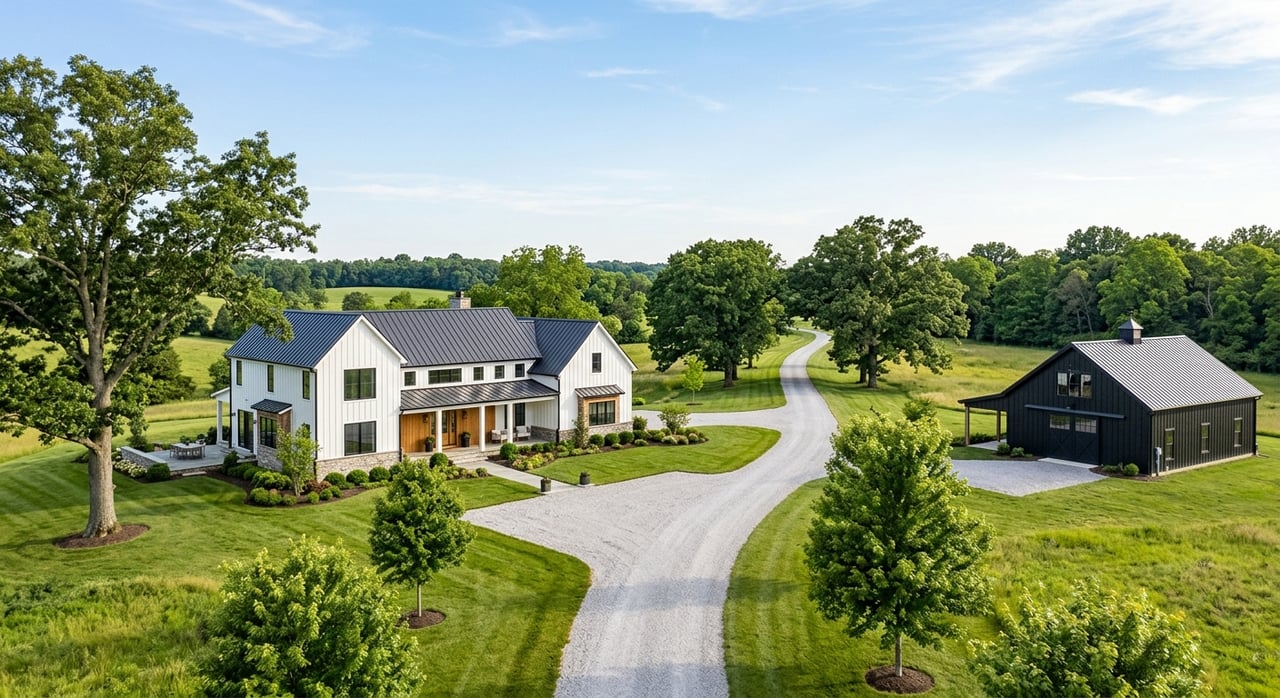
Living on Acreage in New Vernon: Privacy, Space, Possibility
If you have ever wanted more room to breathe, New Vernon is the kind of place that makes that idea feel real. Life on acreage here is not just about owning more land. It is about privacy, flexibility, and a setting shaped by open space, preservation, and thoughtful planning. If you are considering a move to New Vernon, this guide will help you understand what acreage living can actually look like day to day. Let’s dive in.
New Vernon is the village center of Harding Township, and the township has long planned for a rural, low-density character. According to the Harding Township Master Plan, the village is a historic crossroads community with a mixed-use core, civic buildings, and mostly residential surroundings.
That rural feel is not accidental. The same master plan notes that village areas are not served by public water or sewer infrastructure, which helps preserve a more countryside-like setting. In a region where many communities are built around denser suburban development, that difference shapes how New Vernon looks and feels.
Part of New Vernon’s appeal comes from the scale of Harding Township as a whole. Morris County’s 2020 population density table lists Harding Township at 3,871 residents and 193 people per square mile.
That number matters because it gives context to what you experience on the ground. The township master plan also states that more than 6,200 acres of preserved open space make up almost half of Harding’s land area. For you, that often translates into longer views, more separation between homes, and a stronger sense of quiet.
In New Vernon, acreage is shaped by zoning rules that intentionally create larger homesites and generous spacing. Under the township’s zoning code, the R-1 zone requires a minimum lot size of 3 acres, while the RR zone is designed around 5-acre average lots, with some flexibility that can allow 3-acre minimum lots in certain subdivisions.
Those rules do more than set a number on paper. They help create the physical experience people are usually looking for when they say they want land: more distance from neighbors, more room for outdoor uses, and more control over how your property functions.
One of the biggest reasons acreage homes in New Vernon feel private is the setback structure. In the R-1 zone, the township requires structures to be set back at least 100 feet from lot lines or road lines, with additional rules for certain lot types, according to the township code.
That kind of separation changes everyday living. Your house may sit farther back from the road, and neighboring structures are often spaced farther apart than in a typical suburban neighborhood. The result is a setting that can feel more like a private compound or estate property than a standard homesite.
Privacy in New Vernon is not only about lot size. It is also reinforced by landscape protections. The township requires a tree conservation area of 50 feet along road frontages and 25 feet along other property lines in the R-1 zone, with limits on removing larger trees without a permit, as outlined in the zoning regulations.
For homeowners, that can help preserve a wooded edge and soften sightlines across large properties. It also means the visual character of the area stays greener and more natural over time.
Acreage living becomes especially appealing when the property can support more than a house and lawn. Harding’s zoning code allows a wide range of accessory structures in the R-1 zone, including detached garages, sheds, barns, farm outbuildings, greenhouses, swimming pools, pool houses, tennis courts, workshops, animal structures, stables, and children’s playhouses, according to the township code.
That flexibility is a big part of the lifestyle. Depending on the property and approvals, you may be able to create spaces for recreation, storage, hobbies, gardening, or equestrian uses. In many cases, the land functions more like a full outdoor living environment than a simple backyard.
Flexibility does not mean a free-for-all. The township zoning office states that zoning approval is required for additions and many property improvements, including barns, garages, gazebos, hot tubs, patios, pools, pool houses, sheds, solar panels, sports courts, fences, signs, and generators, as reflected in the zoning framework.
If you are buying with future plans in mind, this is important. A property may offer real potential, but it is wise to understand approvals, setbacks, and site constraints before you make assumptions about what can be added.
New Vernon acreage can also support multi-structure living in some cases. The township code states that an accessory residence may be established on lots of 6 acres or more in the R-1 and RR zones, and an affordable accessory residence may be allowed on at least 5 acres in the R-1 zone, subject to the code’s requirements in the municipal regulations.
That tells you something meaningful about the local planning model. In the right setting, larger properties may be designed to accommodate more than one residential structure, which can be useful for extended household needs or long-term estate planning.
Harding Township has a longstanding relationship with open land and horse property. The zoning code permits farming and boarding stables for horses on lots of 10 acres or more in the R-1 zone, according to the township code.
The township’s master plan also highlights Harding’s long history of bridle trails, many of which are still actively used. In addition, the township’s open space criteria specifically reference equestrian trails and hiking. Together, those details show that land in and around New Vernon is not only scenic. It is also part of a broader landscape where outdoor use and stewardship remain central.
One of the most important practical differences in New Vernon is utility infrastructure. The master plan explains that there is negligible sewer infrastructure and limited public water service in these parts of the township, and that most dwellings in RR and R-1 areas rely on individual septic and potable water systems.
For you as a buyer or owner, that means acreage living comes with a more hands-on property mindset. Wells, septic systems, drainage, and site conditions are part of the ownership picture. This does not make acreage less appealing, but it does mean the lifestyle works best when you appreciate both the freedom and the responsibility that come with private-site management.
New Vernon’s character is closely tied to preservation. The village itself is treated as a historic place, and the township master plan states that a portion of New Vernon Village was designated a historic district in 1982 and later expanded as a municipal historic district. The plan also calls for preserving the historic streetscape and maintaining small-scale mixed uses in the village core.
Outside the village center, open-space and farmland preservation also shape the broader setting. The Harding Land Trust describes its mission as preserving farmland, woodlands, and natural areas that define the township’s rural character. Morris County reports through that preservation framework that more than 8,200 acres of farmland have been permanently preserved since the program began in 1987, and a 40-year anniversary update noted 142 farms preserved with county and state funding.
The biggest truth about life on acreage in New Vernon is simple: the privacy is real, but so is the stewardship. Large lots, tree buffers, preserved land, and low-density zoning all help protect the setting people value here. At the same time, owners need to think carefully about wetlands, building envelopes, septic systems, well locations, conservation areas, and possible historic or zoning review.
That is not a drawback so much as part of the area’s identity. New Vernon offers space, privacy, and possibility because the township has put systems in place to keep the landscape from feeling overbuilt.
If you are buying in New Vernon, the details behind an acreage property matter just as much as the beauty you see at first glance. Zoning, setbacks, approvals, site utility systems, and preservation considerations can all influence how a property lives today and what you may be able to do with it in the future.
If you are selling, those same details can become part of the property’s story. Buyers looking at acreage often want clarity around land use, accessory structures, and the practical side of ownership. Strong positioning starts with understanding what makes the property valuable in this specific market.
Whether you are exploring a move, preparing to sell, or trying to better understand the appeal of New Vernon acreage, working with someone who knows Morris County’s local dynamics can make the process much smoother. If you are thinking about your next move in Harding Township or nearby communities, connect with Ryan Dawson for informed, local guidance.

He is a top producing real estate agent at Weichert Morristown. His community involvement and drive for perfection gives him an advantage over other real estate agents in the area. He prides himself on being knowledgeable on the latest marketing technologies, but still relying on “old school” sales techniques.
RYAN DAWSON
ADDRESS
20 MADISON AVE
MORRISTOWN NJ 07960